The Foreigner (2017) review: Jackie Chan trades comedy for drama in this gritty revenge thriller. An in-depth analysis of Chan’s dramatic turn, Pierce Brosnan’s performance, and the political elements.
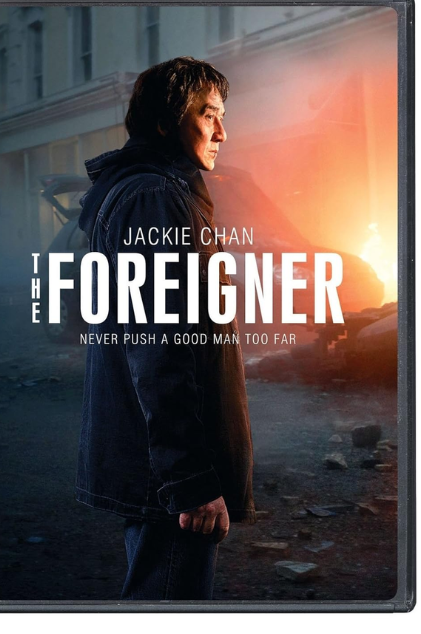
Martin Campbell’s “The Foreigner” marks a significant departure from Jackie Chan’s typical filmography, trading his signature blend of comedy and acrobatics for a somber revenge thriller that explores grief, justice, and political corruption. Based on Stephen Leather’s novel, the film attempts to reinvent Chan as a dramatic actor while delivering the intense action sequences audiences expect.
A Tale of Two Stories
The film follows Ngoc Minh Quan (Jackie Chan), a London restaurateur whose life is shattered when his teenage daughter is killed in a bombing by a group calling themselves the “Authentic IRA.” Consumed by grief and driven by his mysterious military past, Quan embarks on a relentless quest for the names of those responsible. His search leads him to Liam Hennessy (Pierce Brosnan), a British government official with former IRA ties who claims ignorance about the terrorist cell.
What unfolds is essentially two interconnected narratives: Quan’s personal vendetta and Hennessy’s political maneuvering as he attempts to protect his legacy while uncovering the truth behind the bombings. This dual structure provides complexity but also creates pacing challenges, as the film frequently shifts between intimate revenge sequences and sprawling political intrigue.
Chan’s Dramatic Gambit
At 63, Jackie Chan takes on perhaps his most dramatically demanding role. Gone is the affable, wise-cracking persona that defined his career. Instead, Chan embodies a haunted man whose weathered face conveys decades of loss and survival. His Quan is methodical rather than flashy, deliberate rather than spontaneous. The performance requires Chan to communicate primarily through silence and physicality of a different kind—not the balletic martial arts choreography he’s famous for, but the heavy movements of a man carrying unbearable weight.
The action sequences reflect this tonal shift. Rather than the inventive prop comedy and death-defying stunts of Chan’s Hong Kong classics, the fights here are brutal, grounded, and efficient. Quan uses guerrilla tactics, homemade explosives, and traps that feel more “First Blood” than “Police Story.” For viewers expecting traditional Jackie Chan action, this may disappoint. For those willing to accept this reinvention, it demonstrates Chan’s range and willingness to evolve with age.
Brosnan’s Balancing Act
Pierce Brosnan delivers a layered performance as Hennessy, a man caught between his violent past and diplomatic present. His Irish accent has been a point of contention among critics, but Brosnan brings genuine complexity to a character who must juggle political pressures, family drama, and the persistent threat posed by Quan. Hennessy isn’t a straightforward antagonist—he’s a survivor playing a dangerous game, and Brosnan captures both his cunning and vulnerability.
The dynamic between Chan and Brosnan provides the film’s most compelling moments. Their cat-and-mouse game escalates methodically, with each man underestimating the other until circumstances force a reckoning.
Political Backdrop and Thematic Weight
The film’s exploration of Irish-British relations and the legacy of the Troubles adds gravitas but also raises questions about its timing and necessity. Set against the backdrop of hard-won peace, the emergence of a rogue IRA faction serves as the catalyst for examining how easily old wounds can reopen. Some may find this political dimension adds depth; others might view it as an unnecessary complication that dilutes the revenge narrative.
The screenplay attempts to weave together personal tragedy and political conspiracy, though the balance isn’t always successful. Extended scenes of bureaucratic maneuvering and backroom negotiations can slow momentum, particularly when they pull focus from Quan’s story for extended stretches.
Technical Execution
Director Martin Campbell, who revitalized the Bond franchise twice with “GoldenEye” and “Casino Royale,” brings professional competence to the proceedings. The action is clearly shot and coherently edited, the London and Irish locations provide atmospheric backdrops, and the pacing generally maintains tension despite the dual storylines. However, the film lacks the visual flair or memorable set pieces that distinguished Campbell’s best work.
The cinematography favors muted colors and grey skies that reinforce the somber tone, while the score underlines emotional beats without becoming intrusive. These are solid technical choices that serve the story without calling attention to themselves.
Who Is This For?
“The Foreigner” occupies an interesting middle ground. It’s too serious and measured for audiences seeking Jackie Chan’s trademark entertainment, yet perhaps too formulaic for viewers wanting a truly innovative thriller. The film works best for:
- Viewers curious to see Jackie Chan stretch his dramatic muscles
- Fans of political thrillers willing to accept genre conventions
- Those who appreciate revenge narratives grounded in character rather than spectacle
- Audiences interested in the intersection of personal tragedy and political machinations
Conversely, this may disappoint fans expecting Chan’s acrobatic humor or those seeking a straightforward action film without extended political subplots.
Final Assessment
“The Foreigner” represents an ambitious attempt to showcase Jackie Chan’s evolution as an actor while delivering a politically charged thriller. It succeeds in demonstrating Chan’s capacity for dramatic work and features strong performances from both leads. The film’s willingness to favor character over spectacle and complexity over simplicity deserves recognition.
However, the dual narrative structure creates uneven pacing, and the film occasionally feels torn between being a intimate revenge story and an expansive political drama. The muted action, while intentional, may leave some viewers wanting more dynamic sequences.
Ultimately, “The Foreigner” is a competent thriller elevated by committed performances, particularly from a Jackie Chan willing to subvert expectations. It may not reach the heights of Campbell’s best work or Chan’s classic films, but it offers a mature, if imperfect, alternative to both stars’ typical output. For viewers approaching it on its own terms rather than expecting a traditional Jackie Chan vehicle, there’s substance to appreciate beneath the grey skies and moral ambiguity.
Watch The Foreigner Now
Ready to experience Jackie Chan’s dramatic transformation for yourself? “The Foreigner” is available to stream or rent on major platforms:
Stream or Rent:
- Amazon Prime Video
- Apple TV
- Google Play Movies
- YouTube Movies
- Vudu