
Explore TikTok aesthetic shopping addiction, how social media shapes impulse buying, and the psychology behind aesthetic-driven consumer behavior.
Hook: When Scrolling Turns Into Spending Without You Realizing It
You open TikTok just to relax for a few minutes. A soft-spoken creator is organizing pastel-colored storage bins, arranging glowing LED lights, or unboxing the “perfect” minimal makeup set. Everything feels calm, curated, emotionally satisfying. And suddenly, you’re no longer just watching you’re wanting. That subtle shift from content consumption to emotional craving is exactly where TikTok aesthetic shopping addiction begins. It doesn’t feel like traditional advertising. It feels like inspiration. But underneath the aesthetics is a powerful psychological system designed to turn desire into impulse.
What “TikTok Aesthetic Shopping Addiction” Really Means
At its core, TikTok aesthetic shopping addiction is not about buying too much it’s about why people feel compelled to buy in the first place. It describes a behavioral loop where users repeatedly purchase products not out of necessity, but because those products represent a visual lifestyle they emotionally identify with. The focus shifts from function to fantasy. In this environment, shopping becomes less of a decision-making process and more of an emotional reaction to curated digital aesthetics. The product becomes a symbol of identity, aspiration, and emotional comfort.
The Psychology Behind Aesthetic Shopping Behavior
Dopamine-Driven Scrolling and Anticipation
TikTok’s fast-paced content structure creates a constant reward loop. Every swipe introduces a new visual stimulus. This unpredictability activates dopamine release from anticipation rather than purchase, making scrolling itself addictive.
Emotional Regulation Through Consumption
Aesthetic products promise emotional states like calmness, control, or identity transformation. Buying becomes emotional regulation purchasing the feeling of being a more “put together” version of yourself.
Identity Construction Through Objects
What you own becomes part of identity expression. Users think in loops like “If I buy this, I become that version of myself,” making consumption a form of self-design.
Social Validation Imprinting
Likes, saves, and viral trends act as silent approval signals. Popular aesthetics gain perceived value simply through social reinforcement.
How TikTok, Instagram, and Amazon Shape Desire
Platforms like TikTok and Instagram curate emotional environments rather than just products. TikTok blends entertainment with subtle product exposure, reinforcing loops of desire. Instagram and Pinterest store aspiration visually, while Amazon converts that desire into instant purchase. The pipeline becomes seamless: Inspiration → Emotional attachment → Identity projection → Purchase.
Real-Life Shopping Behavior Patterns in Aesthetic Culture
The “Curated Life” Shopping Cycle
People buy items in themed sets like matching desk setups or aesthetic wardrobes instead of individual functional purchases.
The Repeat Reinvention Loop
Spaces and styles are constantly re-aestheticized, driven by trend cycles rather than need.
The Screenshot-to-Cart Pipeline
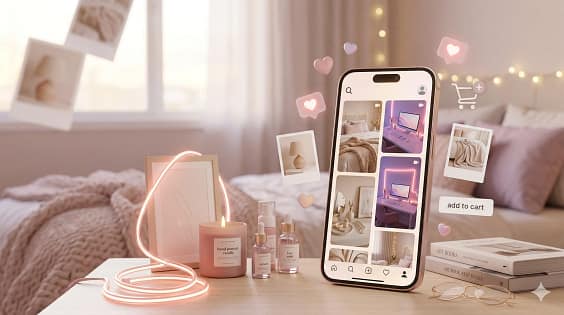
Screenshots from TikTok become shopping lists that convert emotion directly into consumption.
Micro-Impulse Bundling
Multiple aesthetic items are purchased together to complete a visual “vibe” or identity.
Common Illusions Behind Aesthetic Shopping Addiction
The Illusion of Transformation
Products are believed to transform life, but often only temporarily shift mood or perception.
The Illusion of Personal Style Discovery
Users think they are finding identity, but often follow algorithm-amplified trends.
The Illusion of Minimalism Through Consumption
Minimalist aesthetics often require more purchases to maintain visual simplicity.
The Illusion of Emotional Completion
Shopping creates short emotional highs that fade quickly, restarting the cycle.
When Desire Becomes Aestheticized Consumption
TikTok aesthetic shopping addiction reflects a cultural shift where desire is shaped by visuals, identity is constructed through objects, and emotion is continuously influenced by algorithmic design. People are not just buying products they are participating in a simulation of idealized lives that feel emotionally close, visually perfect, and always one purchase away. The most revealing part is not that people buy aesthetic things, but that those things often feel like they were always meant to belong to who they are becoming.